
— This site is still under construction —
The major turning point in the urban development of Saigon
is widely considered to be the French conquest beginning in 1859 and the establishment of French colonial rule, especially from the 1860s onward.
Why this is the key turning point
Before 1859, Saigon (Gia Định) was:
-
A regional trading town and military-administrative center under Vietnamese rule
-
Organized around canals, rivers, citadels, and villages, with organic, low-density development
-
Largely shaped by Confucian, Vietnamese, and Khmer spatial traditions
Saigon 1878
Cochinchine française. Plan cadastral de la ville de Saigon Author(s) M. Bertaux, Service du cadastre et de la topographie Cartographer(s) A. Chauvet Year 1898 Edition H. Barrère Size 65 x 60 cm Scale 1:4000 Comments Publié sous la direction de M. Bertaux; géomètre en chef, chef du service du cadastre et de la topographie. Réduit et dessiné par A. Chauvet, dessinateur du cadastre. Source
-
New urban function
-
Saigon became the capital of French Cochinchina
-
A political, economic, and cultural hub of colonial Indochina
-
Nicknamed the “Pearl of the Far East”
-
This period marks Saigon’s transition from a pre-modern Southeast Asian city to a modern colonial metropolis.
Saigon 1881 in der Vogelschau
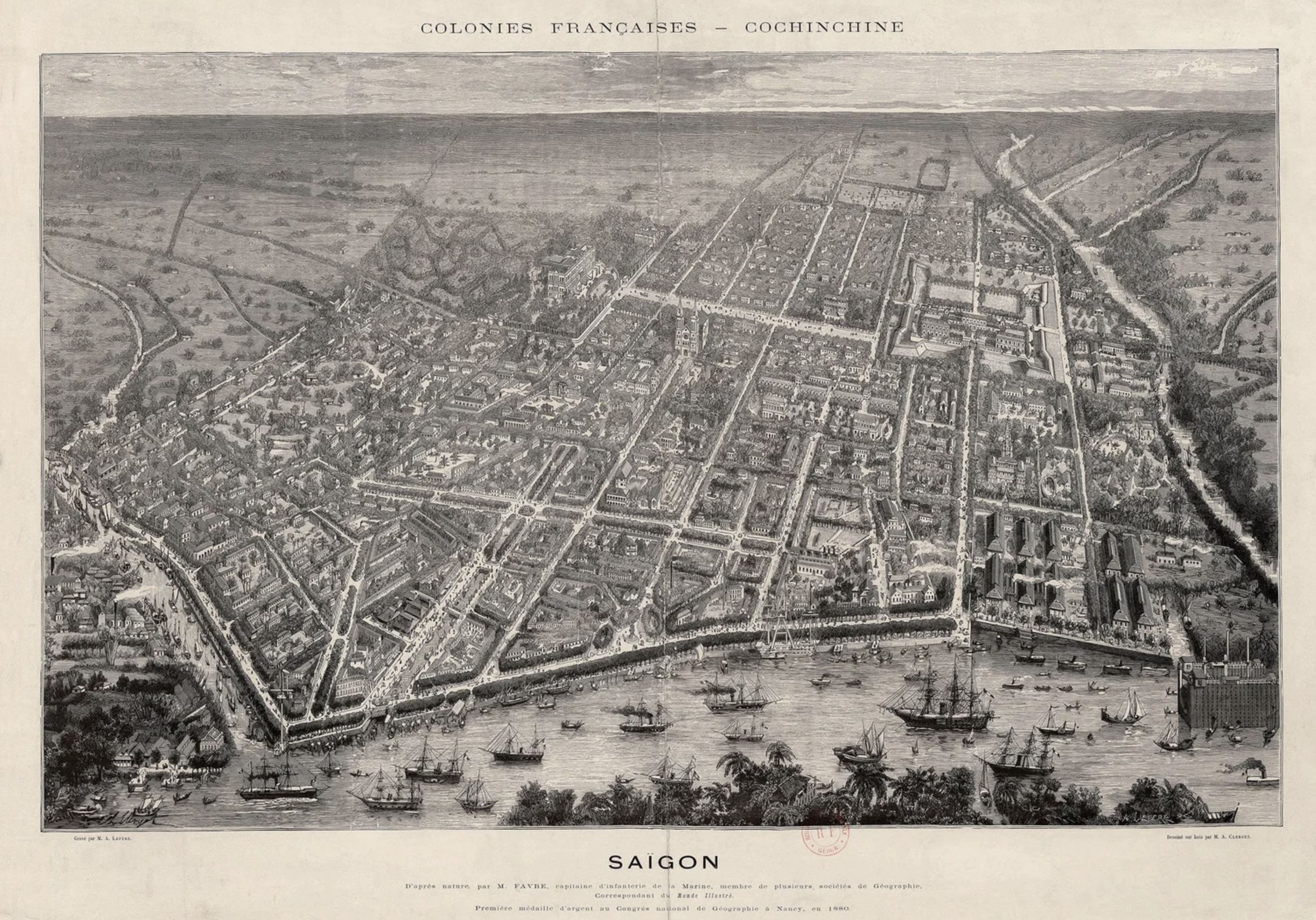
Other important (but secondary) turning points
While the French period is the most decisive, other moments also mattered:
-
1954 (Geneva Accords) – Saigon becomes the capital of South Vietnam, triggering rapid population growth and suburban expansion
-
1975 (Reunification) – Saigon becomes Ho Chi Minh City; socialist planning and later market reforms reshape urban growth
-
Đổi Mới reforms (post-1986) – explosive urbanization, high-rise development, and global integration
Eastern Indochina 1963
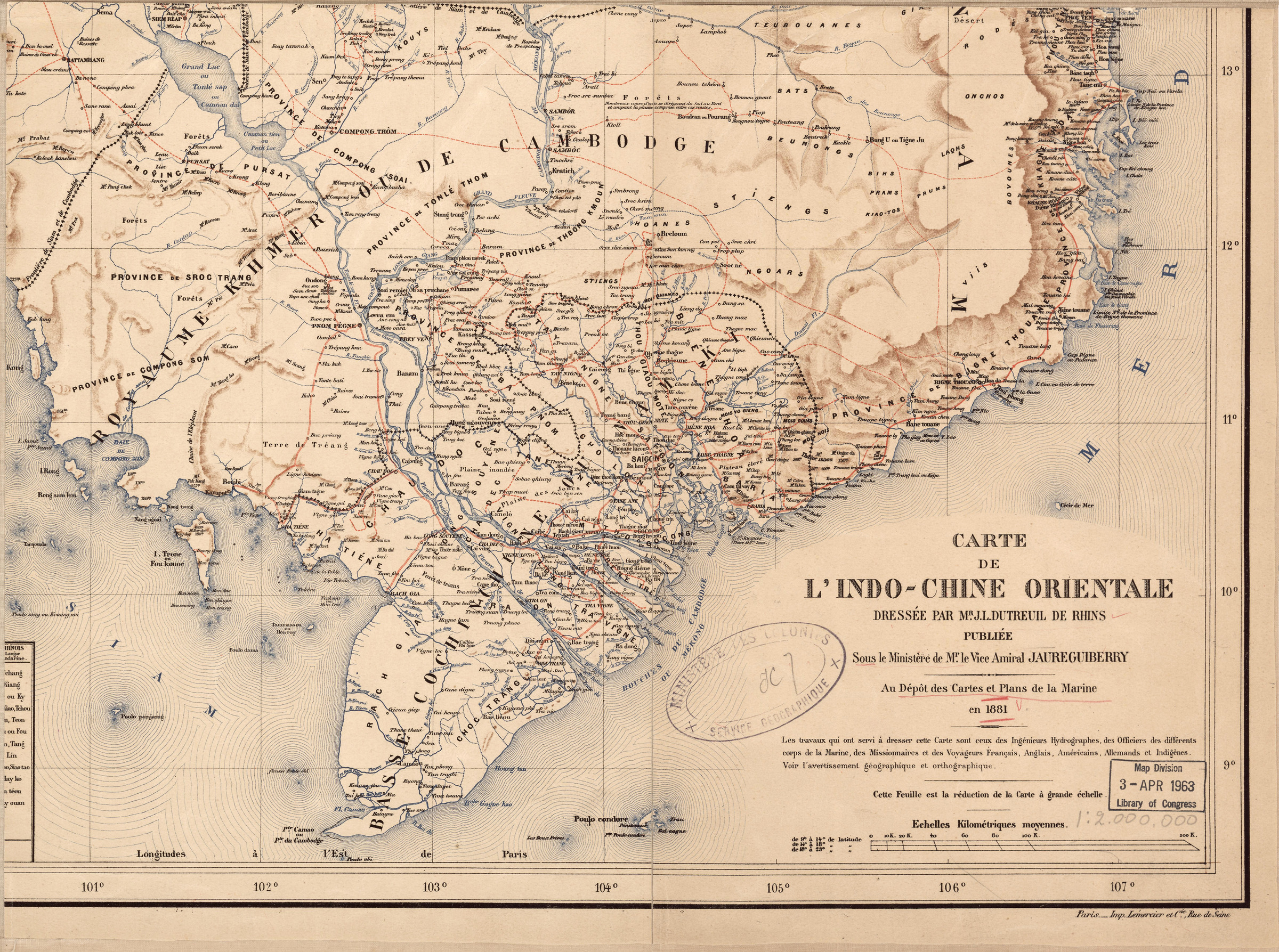
Carte de l’Indo-Chine Orientale (détail, Sud Vietnam), Alternative original title Khu vực miền Nam Việt Nam, Cartographer: J.L. Dutreuil de Rhins, Year 1881, Size 1: 200.000
Note at the bottom right of the map: At the Naval Map and Plan Depot in 1881. The work used to create this map was carried out by hydrographic engineers, officers of the various branches of the Navy, missionaries, and French, English, American, German, and Indigenous travelers. See the geographical and orthographic warning. Paris, Lemercier & Co. Printing House, Rue de Seine.
Stamp 1963 Map Collection. Library of Congress. Source: https://virtual-saigon.net/Maps/Source?ID=1659